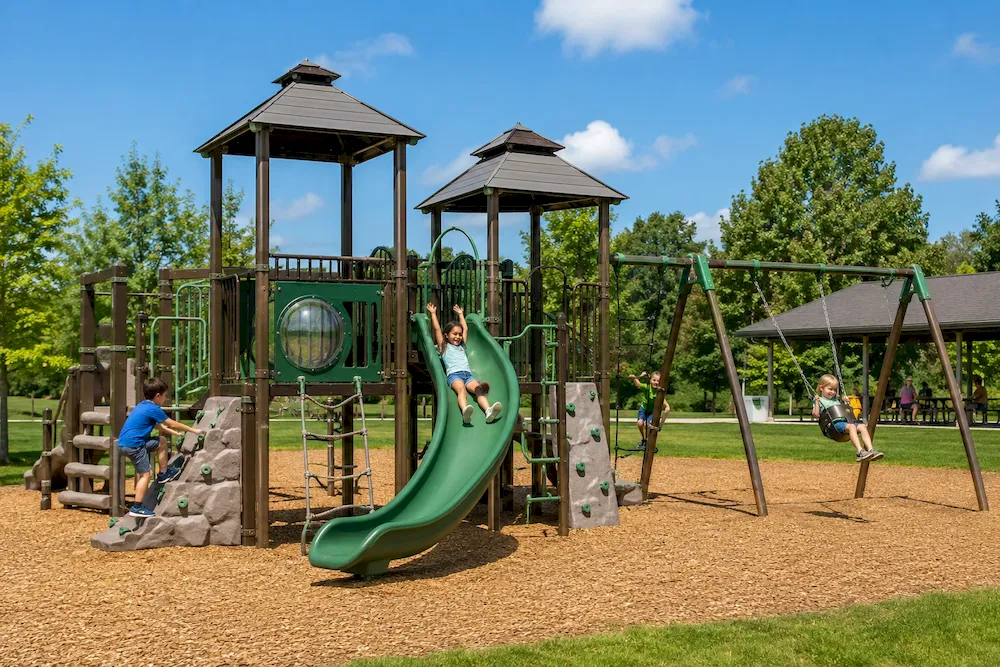
A play set is an important part of many outdoor spaces. It gives children a place to move, climb, slide, swing, and play with others. For schools, parks, communities, and backyard projects, choosing the right play set is not only about looks. It is also about safety, space, age group, materials, budget, and long-term use.
Different projects need different types of play sets. A school may need equipment for many children every day. A public park may need stronger materials and more safety space. A backyard project may need a smaller play set that is easy to install and maintain. Before buying a play set, it is important to understand your real needs.
1. Understand Who Will Use the Play Set
The first step is to know the main users. Children of different ages need different play equipment. A play set for toddlers should not be the same as a play set for older children.
For Toddlers
Toddlers need low platforms, small slides, simple climbing steps, and safe handrails. The height should be low, and the structure should be easy to use. The goal is to help children move, balance, and explore safely.
For Preschool Children
Preschool children can use slightly higher slides, small climbing walls, tunnels, and swings. They like simple challenges, but the design still needs to be easy to understand.
For Older Children
Older children usually need more activities. They may enjoy higher platforms, longer slides, climbing nets, monkey bars, and fitness-style play equipment. For this age group, the play set should give them enough challenge and space to move.
2. Check the Available Space
Before choosing a play set, measure the space where it will be installed. You need to know the length, width, and any limits around the area. Do not only measure the equipment size. You also need to leave enough safety space around the play set.
Children need room to run, swing, climb down, and move around. If the play set is too close to walls, fences, trees, roads, or other equipment, it may create safety problems.
Things to Check Before Installation
- Total ground size
- Flatness of the ground
- Distance from buildings or fences
- Drainage condition after rain
- Entrance and exit space
- Space for parents, teachers, or supervisors
3. Choose the Right Material
Play sets can be made from wood, metal, plastic, rope, or a mix of different materials. Each material has its own use. The best choice depends on your project type, weather, budget, and maintenance plan.
Wooden Play Sets
Wooden play sets are often used in backyards, schools, parks, and natural-style playgrounds. They can match outdoor spaces well. Wood is a common choice for projects that want a simple and natural look.
But wood needs regular care. It may need surface treatment, checking, and maintenance to prevent cracks, rot, or loose parts. If you choose a wooden play set, make sure the wood is treated for outdoor use.
Metal Play Sets
Metal play sets and metal swing frames are strong and suitable for long-term use. They are often used in schools, parks, and public playgrounds. Metal can support heavier use and is easier to clean.
For outdoor projects, the metal should have anti-rust treatment, such as powder coating or galvanized finish. This helps the equipment last longer in rain, sun, and changing weather.
Plastic Parts
Plastic is often used for slides, panels, roofs, and small play parts. It is light, smooth, and easy to shape. Good outdoor plastic should resist sunlight and weather. Low-quality plastic may fade or crack after long use.
4. Think About Safety First
Safety is the most important part of choosing a play set. A good play set should be stable, smooth, and suitable for the right age group. It should not have sharp edges, unstable parts, or unsafe gaps.
Basic Safety Points
- The structure should be strong and stable.
- Platforms should have guardrails where needed.
- Steps and climbing parts should be easy to grip.
- Slides should have smooth edges.
- Swing seats should have enough space around them.
- Bolts and screws should be covered or fixed well.
- The ground surface should help reduce impact.
For schools and public parks, it is also important to check local safety standards. Different countries and regions may have different rules for playground equipment.
5. Match the Play Set with the Project Type
Different places have different needs. A play set should fit the real use of the project.
Play Sets for Schools
Schools need play sets that can handle daily use. Many children may use the equipment during breaks or activity time. The equipment should be strong, easy to manage, and suitable for different age groups.
For schools, it is useful to choose play sets with slides, climbing parts, swings, and fitness elements. These can help children move their bodies and play together.
Play Sets for Parks
Public parks usually need larger and stronger play sets. The equipment may be used by many children from different families. It should be durable and easy to maintain.
Park play sets should also have clear layout planning. There should be enough open space, safe walking paths, and good visibility for parents or guardians.
Play Sets for Backyard Projects
Backyard play sets are usually smaller. Families may choose a wooden swing set, a small slide, or a compact play set with climbing and swinging functions.
For backyard use, the most important points are size, safety, easy installation, and simple maintenance. The play set should fit the yard and still leave enough space for children to move.
6. Plan the Functions Children Need
A good play set should give children different ways to play. Some children like slides. Some like swings. Some like climbing. A better design can include several activities in one structure.
Common Play Functions
- Slides for movement and balance
- Swings for body control
- Climbing parts for strength
- Tunnels for exploration
- Bridges for coordination
- Fitness bars for older children
- Open platforms for social play
You do not need to choose every function. The right choice depends on your space and budget. For small spaces, a slide and swing may be enough. For schools and parks, a larger play set with more functions may be better.
7. Consider Weather and Outdoor Conditions
Outdoor play sets must face sun, rain, wind, and temperature changes. If the material is not suitable for outdoor use, the equipment may wear out quickly.
For hot areas, check if metal parts may become too hot under the sun. For rainy areas, check if the material can resist rust and water damage. For cold areas, check if plastic parts can stay strong in low temperatures.
Outdoor Material Checks
- Anti-rust metal surface
- Outdoor-treated wood
- UV-resistant plastic
- Strong ropes and connectors
- Good drainage under the equipment
8. Think About Maintenance
A play set needs regular checks after installation. This is especially important for schools and parks. Daily use can make screws loose, surfaces worn, or some parts damaged.
Before buying, ask how to maintain the play set. Also ask if replacement parts are available. A good supplier should provide clear installation guidance and maintenance suggestions.
Regular Maintenance Tasks
- Check screws, bolts, and connectors
- Check swing chains or ropes
- Clean slides and panels
- Check wooden surfaces for cracks
- Check metal parts for rust
- Replace damaged parts in time
9. Set a Clear Budget
Budget is also important. The cost of a play set is not only the product price. You may also need to consider shipping, installation, ground preparation, safety flooring, and future maintenance.
A cheaper play set may save money at first, but it may cost more later if the material is weak or parts are hard to replace. A better choice is to find a balance between price, safety, and service life.
10. Choose a Reliable Supplier
A reliable supplier can help you save time and avoid many problems. They should understand playground projects and provide support before and after the order.
Questions to Ask the Supplier
- Can you provide a layout plan?
- What materials do you use?
- Is the play set suitable for outdoor use?
- Can you customize size, color, or function?
- Do you provide installation guidance?
- Are replacement parts available?
- How is the product packed for shipping?
For B2B projects, communication is very important. Schools, parks, contractors, and distributors often need clear drawings, product details, packing information, and delivery support.
Conclusion
Choosing the right play set takes planning. You need to think about the users, space, material, safety, function, weather, maintenance, and budget. A good play set should fit the project and support long-term outdoor use.
For schools, choose strong and practical equipment for daily use. For parks, choose durable play sets with enough safety space. For backyard projects, choose a size and function that match the family’s needs.
If you are planning an outdoor playground project, start with clear information about your site, target age group, and budget. This will make it easier to choose the right play set and build a safer play area for children.